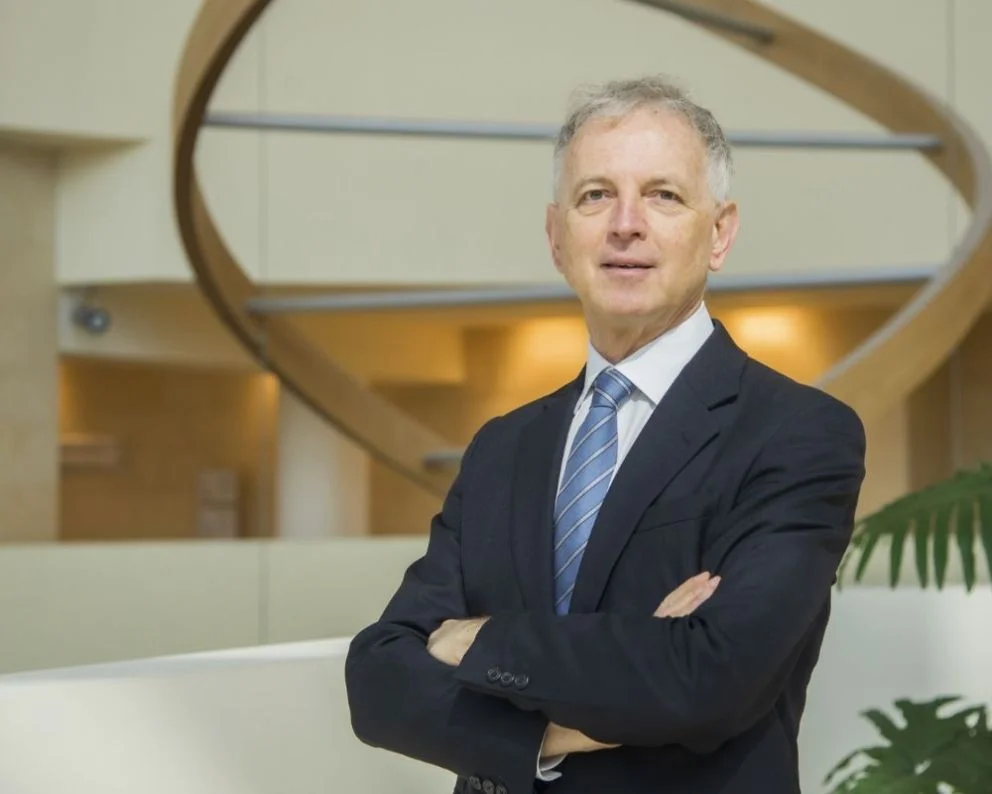
Luigi Naldini has been elected an international member of the US National Academy of Medicine (NAM) for his contributions to gene therapy. Naldini is a full professor at Vita-Salute San Raffaele University (UniSR) and since 2008 has directed the San Raffaele Telethon Institute for Gene Therapy (SR-Tiget), which develops treatments for rare genetic diseases. The election was announced on 19 October 2026, during the Academy’s annual meeting.
What is the National Academy of Medicine?
The NAM was founded in 1970 as the Institute of Medicine. Together with the National Academy of Sciences and the National Academy of Engineering, it makes up the US National Academies, which provide independent analysis and advice on science, health and health policy. The Academy regards election to its ranks as one of the highest honours in the fields of health and medicine.
Its members include Katalin Karikó and Drew Weissman, who shared the 2023 Nobel Prize in Physiology or Medicine for the mRNA research that made COVID-19 vaccines possible, and Carl June, one of the pioneers of CAR-T therapies for blood cancers.
How do you become a member of the National Academy of Medicine?
New members are elected by existing ones. Election recognises significant contributions to the advancement of the medical sciences, healthcare and public health, as well as a commitment to serving the community. Only a handful of international members are elected each year, and those elected commit to contributing to the work of the Academies, such as studies and advisory committees. Naldini has worked with the National Academies before: from 2015 to 2017 he sat on their committee on human gene editing.
From lentiviral vectors to approved therapies
In electing him, the Academy cited Naldini’s contribution to the development and clinical application of lentiviral vectors, which he was the first to describe in 1996. Derived from HIV and engineered so that they cannot replicate, these vectors can insert a gene even into the DNA of cells that are not dividing at the time, such as blood stem cells. When the stem cell later divides, the functional copy of the gene is passed on to every cell it gives rise to. Today, lentiviral vectors are used in gene therapy, cancer immunotherapy and vaccine production.
Seven of the 18 gene therapies approved in the European Union, and 12 of the 32 approved in the United States, are based on lentiviral vectors. Two of them were developed at SR-Tiget. The first, for metachromatic leukodystrophy, was approved in Europe in 2020 and in the United States in 2024. The second, for Wiskott-Aldrich syndrome, a rare disease of the immune system, was approved by the US Food and Drug Administration (FDA) in December 2025 and by the European Commission in January 2026. Fondazione Telethon, which led its development, is the first non-profit organisation in the world to take a gene therapy through to approval in the United States.
SR-Tiget was also behind Europe’s first approved ex vivo stem cell-based gene therapy, in 2016: a treatment for ADA-SCID, a severe inherited immunodeficiency.
A sustained team effort
I see this recognition as a tribute to the Institute I have the privilege of leading, and to the many researchers and professionals who, over more than twenty years, have helped bring lentiviral vector-based therapies from the laboratory to patients,
said Professor Naldini. Speaking about the award, he also thanked patients and their families and pledged to make these therapies
increasingly accessible and affordable for those who need them.
Until this election, the Academy’s directory did not list a single member based at an Italian institution. The achievements being recognised are rooted in SR-Tiget, founded thirty years ago as a partnership between Fondazione Telethon and IRCCS San Raffaele Hospital, and in its ties with UniSR, where Naldini teaches tissue biology and gene and cell therapy.
You might be interested in

JOIN4ATMP: the new video on ATMP development in Europe

ATMPs advanced therapies: UniSR with EUHA in The Lancet Regional Health–Europe

AlmaLaurea Report 2026